The Pros and Cons of Stamped Concrete for Patios, Driveways, and Pool Decks in Minneapolis
Stamped concrete gives Minneapolis homeowners the high-end look of natural stone, brick, or wood, with fewer weeds and a smoother surface than pavers. The trade-off is that it needs proper installation and regular sealing to survive Minnesota’s freeze-thaw climate, it can crack, and it can get slippery when wet. For most Twin Cities properties, stamped concrete is worth it when a qualified contractor pours it correctly and you maintain it.
Below you will find a straight breakdown of the benefits and drawbacks for patios, driveways, and pool decks, plus a material comparison and the maintenance steps that matter most in Minnesota. If you are weighing options, our team can walk you through what fits your yard.
What Is Stamped Concrete?
Stamped concrete is a poured concrete slab that is colored and imprinted while still wet to mimic stone, brick, slate, or wood. It is installed as one continuous surface, then textured with polyurethane stamp mats and finished with integral color, color hardener, and release agents for depth.
Because the color is mixed into the concrete and worked into the surface rather than painted on, it does not peel. Popular patterns in the Twin Cities include Ashlar slate, random flagstone, herringbone brick, cobblestone, and wood plank.
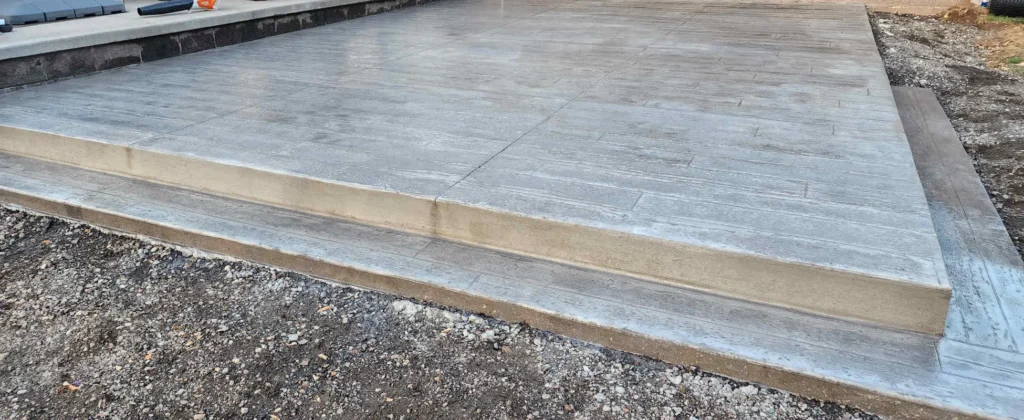
The Pros of Stamped Concrete in Minneapolis
Stamped concrete is popular in the Twin Cities for five main reasons: it delivers an upscale, high-end look, the design options are nearly unlimited, it has no joints for weeds, it lifts curb appeal, and it is easier to maintain than pavers.
Affordable Luxury Look
Stamped concrete delivers the appearance of flagstone, brick, or slate without paying for the natural material itself. It is one of the more budget-friendly ways to get a premium stone look on a patio, driveway, or pool deck, which is a big reason it stays popular across the Twin Cities.
Nearly Unlimited Design Options
With dozens of stamp patterns and hundreds of color combinations, you can match your home’s siding, brick, or trim. Earth tones such as browns, tans, and grays perform best in Minnesota because they blend with the landscape and hide pollen and dirt better than bright colors, which also fade faster in the summer sun.
One Continuous Surface, No Weeds
Pavers have thousands of joints where weeds grow and where individual units can shift and settle. Stamped concrete is a single slab, so you get the stone look without gaps for plants, and without the tripping hazards that uneven pavers create over time.
Adds Curb Appeal and Home Value
A well-designed stamped surface boosts curb appeal and can make a strong first impression. In a competitive metro like Minneapolis-St. Paul, a stone-look patio, driveway, or entry helps a home stand out and adds to its overall appeal.
Lower Maintenance Than Pavers
Pavers usually need joint sand replenished, occasional resetting, and annual power washing. Stamped concrete asks for periodic cleaning and resealing every two to three years. That streamlined routine is a real advantage in a climate this harsh. Our concrete sealing service keeps that surface protected on schedule.
The Cons of Stamped Concrete in Minneapolis
The honest drawbacks come down to Minnesota’s climate and the nature of the material. Stamped concrete is vulnerable to freeze-thaw damage, sensitive to deicing salt, slippery when sealed and wet, harder to repair invisibly than pavers, and it requires ongoing sealing.

Vulnerable to Minnesota’s Freeze-Thaw Cycles
This is the biggest local concern. According to the Minnesota State Climatology Office, the Twin Cities experiences roughly 40 to 50 or more freeze-thaw cycles each winter, among the highest rates in the country. Water enters the surface, freezes, expands by about 9 percent, and pushes the concrete apart. Frost can penetrate 3 to 5 feet deep here.
Poorly installed stamped concrete cracks and scales under this stress. Properly poured stamped concrete with air-entrained mix, a deep compacted base, reinforcement, and correct control joints performs for decades. Control joints direct cracks to planned lines that the stamp pattern often hides. Our guide to protecting Minnesota concrete from cracking covers this in more depth.
Deicing Salt Damage
Rock salt and chemical deicers accelerate scaling and spalling by driving repeated freezing and thawing at the surface. Products with ammonium sulfate or ammonium nitrate are especially destructive and can eat into the stamping. Never use deicing salt on stamped concrete during its first winter, and use sand for traction instead. Salt can also drip off your car after driving on treated roads.
Slippery When Wet, a Real Pool Deck Concern
A freshly sealed stamped surface can be slick when wet, especially with smoother patterns. Around a pool or an entry used by children or older adults, that matters. You can reduce the risk with a heavier texture, a non-skid additive in the sealer, or a rougher stone pattern. Talk to your contractor before choosing a pattern for a pool deck.
Cracks and Repairs Can Be Hard to Hide
Stamped concrete is harder to repair invisibly than pavers, where you can lift and swap a single unit. Color and pattern are difficult to match exactly on a patch or an expansion poured years later. Planning a border, a contrasting band, or a separate pattern for future additions helps disguise the transition.
Requires Regular Resealing
Sealing is not optional in Minnesota. Plan on resealing every two to three years, ideally in the fall before snow arrives. Skip it and the surface loses its defense against moisture, salt, and fading, and it will show wear far sooner.
Stamped Concrete by Application: Patios, Driveways, and Pool Decks
Stamped concrete works well for all three, but the right pattern, thickness, and finish differ by use. The table below summarizes what to prioritize for each.
| Application | Best For | Key Local Consideration |
|---|---|---|
| Patios | Backyard living space, entertaining, stone or brick looks | Proper drainage away from the home; earth-tone colors that hide pollen |
| Driveways | Curb appeal, wider surface, cobblestone or slate looks | Thicker slab and strong base for vehicle loads; salt drip from tires |
| Pool Decks | Cohesive backyard design, custom patterns | Slip resistance is critical; use heavier texture or non-skid additive |
For related work, see our concrete patios and concrete driveways pages.
What Affects a Stamped Concrete Project in Minnesota
Several factors shape how a stamped concrete project comes together in the Twin Cities, from the design you choose to the ground it sits on. Understanding them helps you plan and set realistic expectations before work begins.
| Factor | Why It Matters |
|---|---|
| Pattern and color complexity | Multi-pattern and multi-color designs take more skill and time than a single pattern and tone. |
| Site access | Tight gates and hard-to-reach yards slow down equipment and labor. |
| Slope and drainage | Water must drain away from the home; grading and drainage work may be needed. |
| Soil conditions | Clay soils, common in the Twin Cities, often call for deeper excavation and more base material. |
| Working season | The reliable pour window runs May to October; cold-weather pours need extra provisions. |
Base preparation is the part homeowners rarely see and the part that matters most in a freeze-thaw climate. A deep, well-compacted aggregate base, an air-entrained mix, reinforcement, and correct control joints are what keep a Minnesota slab intact for decades.
Stamped Concrete vs Pavers vs Natural Stone
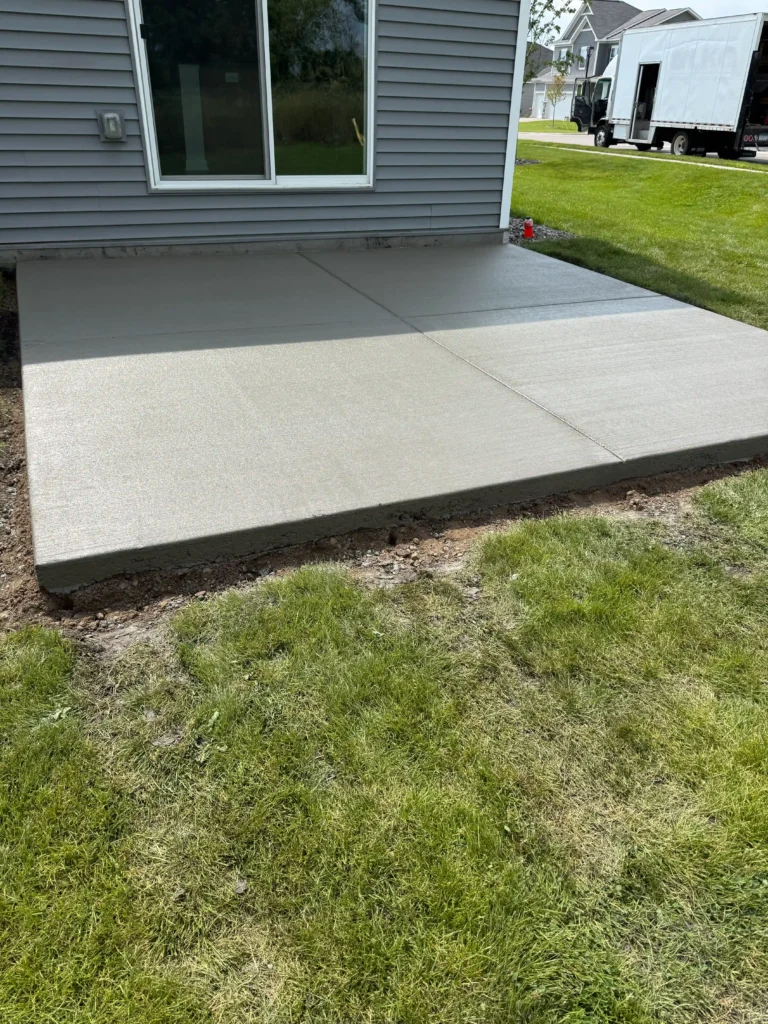
If you are choosing between materials, the short version is this: stamped concrete wins on affordability and a weed-free surface, pavers win on spot repairs, and natural stone wins on the most authentic premium look.
| Factor | Stamped Concrete | Pavers | Natural Stone |
|---|---|---|---|
| Relative affordability | Most affordable | Mid-range | Premium |
| Look | Mimics stone, brick, wood | Modular units | Authentic stone |
| Weeds and joints | None (one slab) | Many joints | Many joints |
| Spot repair | Harder to match | Easy, swap a unit | Moderate |
| Freeze-thaw care | Seal every 2-3 yrs, no salt | Reset and re-sand | Varies by stone |
| Lifespan | 25-30+ yrs installed right | Long, more upkeep | Very long |
How to Make Stamped Concrete Last Through Minnesota Winters
The single most important step is resealing on schedule. Beyond that, protect the surface from salt and physical damage. Follow these steps to get 25 to 30 or more years out of your stamped concrete.
- Reseal every two to three years, in the fall before snow, using a penetrating or quality acrylic sealer.
- Skip deicing salt, especially the first winter. Use sand for traction instead.
- Use a plastic shovel, never metal, to avoid chipping the surface or scoring the sealer.
- Wipe road salt off your car before parking on a stamped driveway.
- Fix small cracks promptly before water gets in and freeze-thaw widens them.
- Keep water draining away from the slab and the home so it cannot pool and refreeze.
For more upkeep guidance, see our concrete driveway maintenance guide and our guide to repairing cracks.
Is Stamped Concrete Worth It in Minneapolis?
Yes, for most Twin Cities homeowners, stamped concrete is worth it when it is installed correctly and maintained. You get a stone-look surface at 30 to 50 percent less than natural stone, with no weeds and less upkeep than pavers, and a 25 to 30 year lifespan is realistic with proper base prep and sealing.
The material is not the right pick for every site. Yards with serious drainage problems, heavy tree roots, or unstable soil may be better served by pavers that flex with ground movement. A reputable contractor will tell you that during the estimate rather than selling you a slab that will fail.
Serving the Minneapolis-St. Paul metro, Erickson Asphalt installs stamped concrete built for Minnesota’s climate. Check our concrete service area or contact us for a free estimate.
Frequently Asked Questions
When is the best time to install stamped concrete in Minnesota?
The reliable installation window in Minnesota runs from May to October, when temperatures support proper curing. Pours outside that season require cold-weather provisions like heated enclosures and insulated blankets. Booking early in the season is smart because Twin Cities contractors fill up quickly once the weather turns.
Does stamped concrete crack in Minnesota winters?
It can. The Twin Cities sees roughly 40 to 50 or more freeze-thaw cycles each winter, which stresses concrete. Properly installed stamped concrete with air-entrained mix, a deep compacted base, reinforcement, and control joints resists cracking and lasts 25 to 30 or more years. Poor installation is the usual cause of early cracking.
Can you use salt on stamped concrete?
You should avoid deicing salt on stamped concrete, especially during the first winter after installation. Salt accelerates scaling and spalling and can stain or damage the stamping. Use sand for traction instead, and choose a less corrosive deicer like calcium magnesium acetate only when necessary on cured concrete.
Is stamped concrete slippery for pool decks?
A sealed stamped surface can be slippery when wet, which matters around pools. You can reduce the risk with a heavier texture, a rougher stone pattern, or a non-skid additive mixed into the sealer. Discuss slip resistance with your contractor before choosing a pool deck pattern.
How often does stamped concrete need to be sealed?
Reseal stamped concrete every two to three years, ideally in the fall before snow arrives. Regular sealing is the single most important maintenance task for protecting the surface against Minnesota’s freeze-thaw cycles, salt, and color fading.
How long does stamped concrete last?
Stamped concrete lasts about 25 to 30 years or more when it is installed correctly and maintained, similar to standard concrete. Proper base preparation, an air-entrained mix, correct control joints, and consistent resealing are what determine whether it reaches the high end of that range in Minnesota.